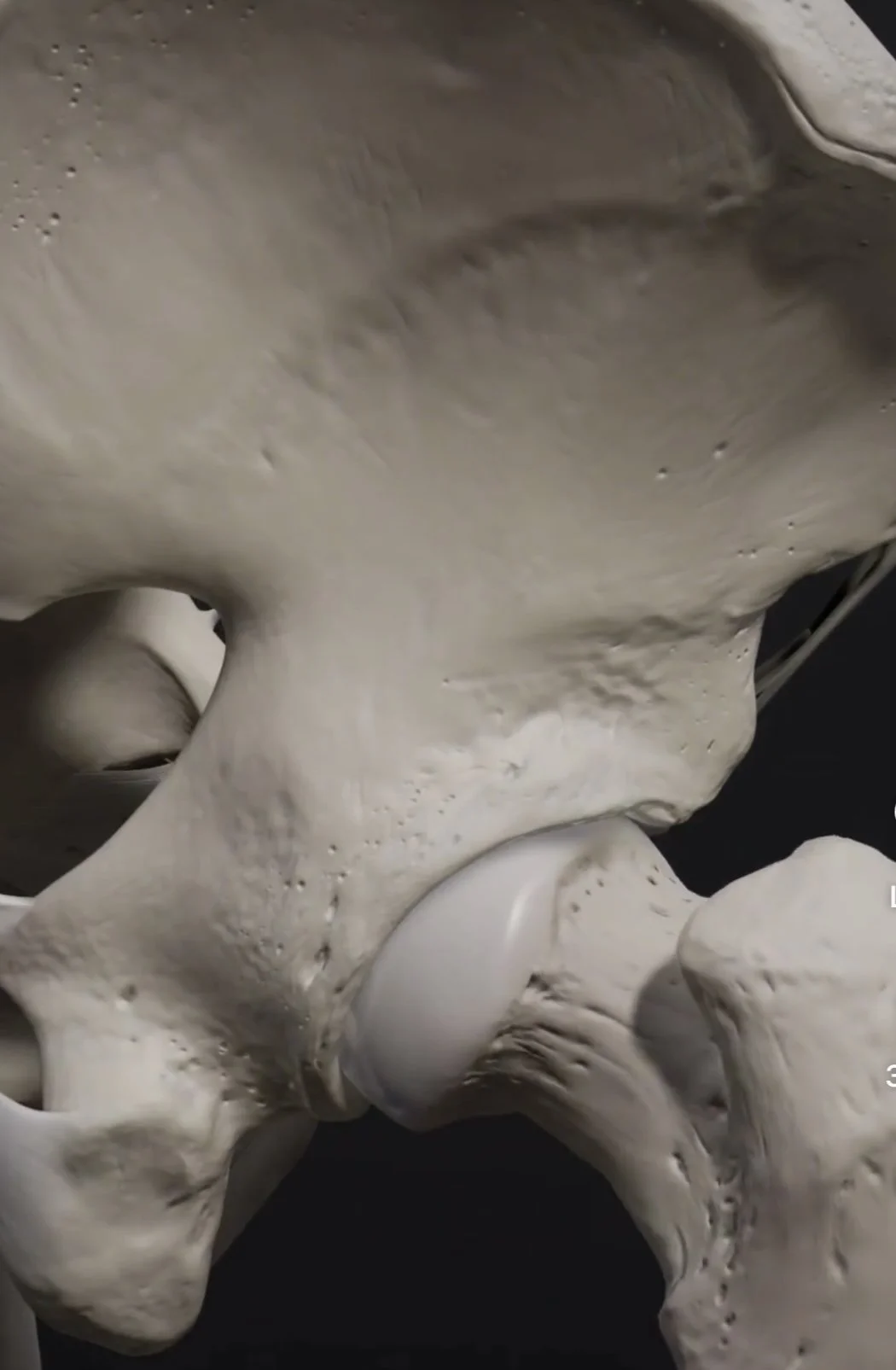
Hip PAin
71% of pain at the hip can be traced back to the low back.
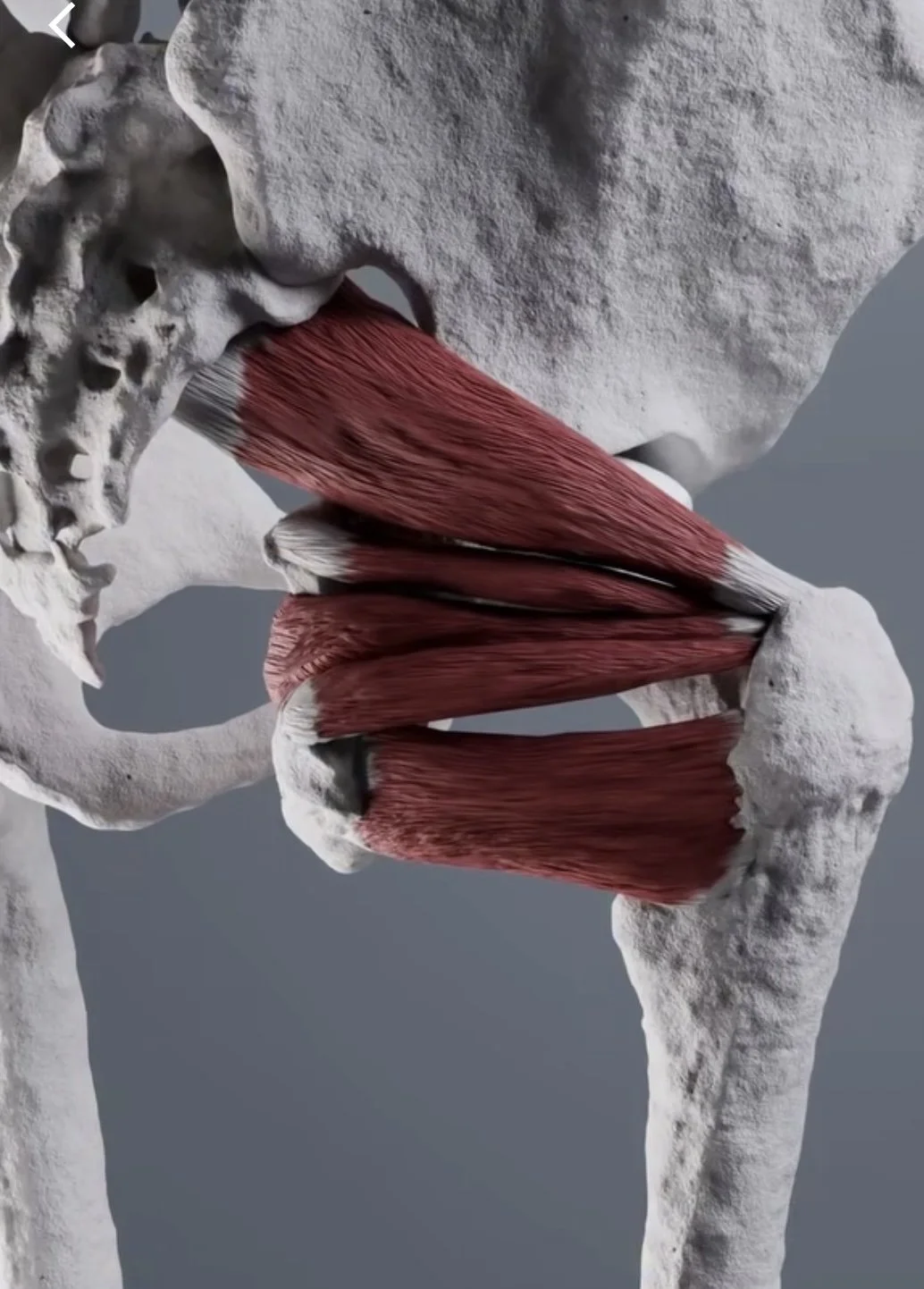
Hip Osteoarthritis is very common, however, contrary to popular belief is asymptomatic and patients can still be highly functional and pain free with hip OA. Attached to the hip are many stabilizing muscles including the gluteus complex which are largely responsible for stability at the hip downstream at the knee as well.
Only 21% of patients with radiographic hip osteoarthritis actually experience pain, meaning the vast majority of structural changes visible on imaging are asymptomatic.[1] This mirrors the pattern seen in knee meniscal tears and rotator cuff pathology. Even more surprising, among patients presenting to primary care with hip or groin pain, only 34% have radiographic evidence of hip OA, highlighting that most hip pain has alternative causes despite what imaging might suggest.
Persons with OA are on average more sedentary than those without OA, and this reduced physical activity leads to a 20% higher age-adjusted mortality.[1] This transforms hip pain from merely a quality-of-life issue into a condition with significant survival implications through its effects on physical activity levels.
Hip labral tears are found in 22-55% of individuals with hip pain, yet labral tears without cysts are usually not responsible for the pain itself.[2] The pain typically originates from other structures like osteochondral injuries, tendinous problems (rectus femoris, gluteus minimus, iliopsoas), or capsulo-ligamentous tears. Even more surprising, the prevalence of gluteus medius pathology in patients with femoroacetabular impingement is as high as one-third, yet this lateral hip pathology is frequently overlooked when clinicians focus exclusively on the anterior/intra-articular symptoms.[3]
Hip OA is twice as common in women as in men, and women demonstrate more severe radiographic findings and symptoms compared to men.[1] This sex difference is more pronounced in the hip than in many other joints.
The Diagnostic Challenge Is Underappreciated
The differential diagnosis includes not just musculoskeletal conditions but also intra-abdominal problems (hernias, appendicitis, masses), intrapelvic causes (ovarian cysts, bladder pathology), vascular claudication, and even leaking abdominal aortic aneurysms.[4][5] The hip can be affected by pathology in four distinct anatomic quadrants—medial (adductor pathology, sports hernias), anterior (intra-articular pathology like FAI and labral tears), lateral (greater trochanteric pain syndrome, gluteus tears), and posterior (hamstring tears, lumbar radiculopathy, piriformis syndrome)—making systematic evaluation essential.[3]
Young Athletes Face Different Pathology
Femoroacetabular impingement is one of the most common causes of hip pain in young adults, often presenting earlier in athletes whose activities require hyperflexion and wide range of motion.[4] This represents a fundamentally different disease process than the degenerative OA seen in older adults, yet both can present with similar anterior hip/groin pain.
References
Does This Patient Have Hip Osteoarthritis?The Rational Clinical Examination Systematic Review. Metcalfe D, Perry DC, Claireaux HA, et al. JAMA. 2019;322(23):2323-2333. doi:10.1001/jama.2019.19413.
Update on Contribution of Hip Labral Tears to Hip Pain: A Narrative Review. Berthelot JM, Brulefert K, Arnolfo P, Le Goff B, Darrieutort-Laffite C. Joint Bone Spine. 2023;90(1):105465. doi:10.1016/j.jbspin.2022.105465.
Editorial Commentary: It Is Imperative to Fix Symptomatic Hip Gluteus Medius Tears at Time of Femoroacetabular Impingement: Why Ignore This Pain in the Butt?. Noble MB, Laskovski JR. Arthroscopy : The Journal of Arthroscopic & Related Surgery : Official Publication of the Arthroscopy Association of North America and the International Arthroscopy Association. 2022;38(5):1506-1508. doi:10.1016/j.arthro.2021.11.037.
Hip Pain in Adults: Evaluation and Differential Diagnosis. Chamberlain R. American Family Physician. 2021;103(2):81-89.
Differential Diagnosis of Pain Around the Hip Joint. Tibor LM, Sekiya JK. Arthroscopy : The Journal of Arthroscopic & Related Surgery : Official Publication of the Arthroscopy Association of North America and the International Arthroscopy Association. 2008;24(12):1407-21. doi:10.1016/j.arthro.2008.06.019.
Targeted Treatments
Mobilization Manual Therapy
PAILS/RAILS/CARS
Blood Flow Restriction Training
Dry Needling
Acupuncture
Therapeutic Exercises