Foot and ankle pain
Flat feet increases your odds of foot and ankle pain by nearly 50%
Foot pain significantly increases fall risk and impairs mobility in older adults, with one longitudinal study finding that 17.4% of individuals reported foot pain that had measurable impact on their ability to perform daily activities and increased their likelihood of falling.[1][2] This connection between foot health and fall prevention is particularly astonishing because falls are a leading cause of injury, loss of independence, and mortality in older populations—yet foot pain is often dismissed as a "normal part of aging" and relatively ignored by both healthcare providers and older people themselves.[2]
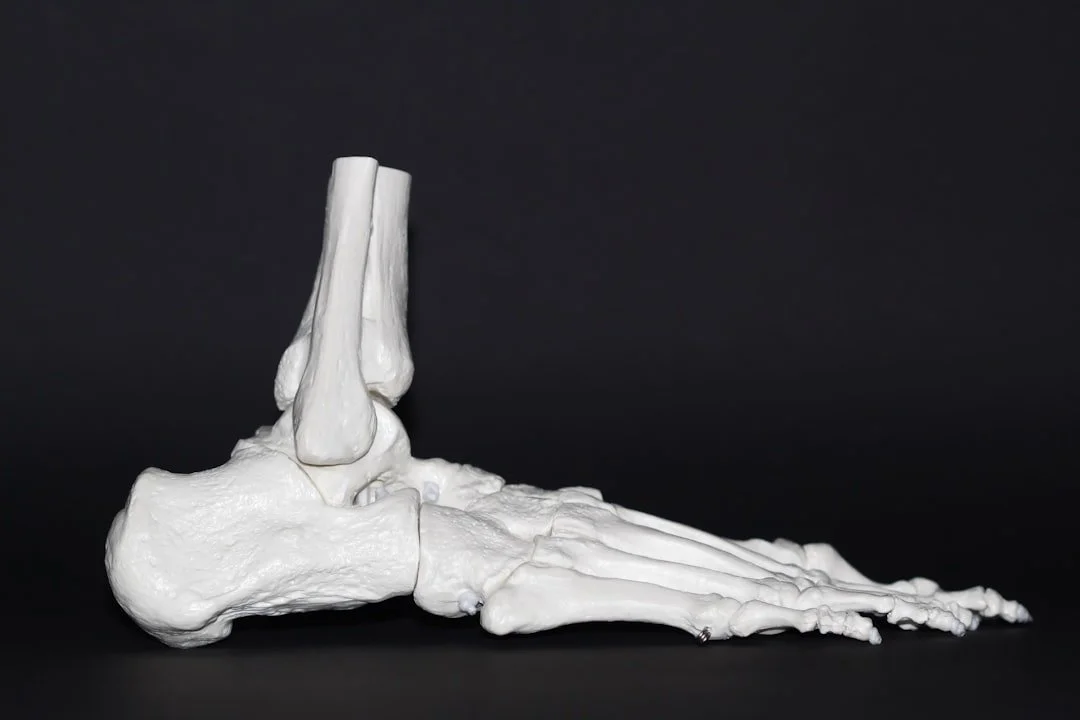
The biomechanical complexity of the foot creates diagnostic challenges. Many tendon injuries involving the medial (posterior tibial), lateral (peroneal), and anterior (tibialis anterior) ankle are commonly missed by primary care physicians, who more readily diagnose ankle sprains, Achilles tendinopathy, and plantar fasciitis.[6] The foot and ankle are responsible for energy absorption and transfer during propulsion, stability during stance, and proprioception—abnormal mechanics can result in connective tissue changes and alterations in muscle function.[6]
The biomechanical implications extend beyond just the foot. Aberrant foot structure has been linked not only to foot osteoarthritis but also to osteoarthritis and pain at the knee and hip, demonstrating that neglecting foot health can trigger a cascade of problems up the entire kinetic chain.[1] The foot is the terminal joint in the lower extremity that opposes external resistance, and inadequate distribution of compressive, tensile, shearing, and rotatory forces during walking can lead to pathologies including shin splints, nonspecific knee pain, and other connective tissue breakdown.[3]
Perhaps most motivating is that many foot problems are modifiable with relatively simple interventions. Comprehensive rehabilitation strategies including early detection, foot-based interventions such as orthoses, and wellness-based approaches have shown success.[1] Biomechanical evidence indicates that foot orthotics and specialized footwear can change muscle activation and gait patterns to reduce joint loading throughout the lower extremity.[4] Yet despite foot and ankle problems accounting for approximately 8% of all musculoskeletal consultations in primary care (with annual consultation prevalence of 290 per 10,000 registered persons), these conditions remain undertreated.[5]
The message is clear: maintaining foot health isn't just about comfort—it's about preserving independence, preventing falls, and protecting the entire lower extremity from degenerative changes.
References
Musculoskeletal Conditions of the Foot and Ankle: Assessments and Treatment Options. Rao S, Riskowski JL, Hannan MT. Best Practice & Research. Clinical Rheumatology. 2012;26(3):345-68. doi:10.1016/j.berh.2012.05.009.
Painful Foot Disorders in the Geriatric Population: A Narrative Review. Oh-Park M, Kirschner J, Abdelshahed D, Kim DDJ. American Journal of Physical Medicine & Rehabilitation. 2019;98(9):811-819. doi:10.1097/PHM.0000000000001239.
Abnormal Biomechanics of the Foot and Ankle. Donatelli RA. The Journal of Orthopaedic and Sports Physical Therapy. 1987;9(1):11-6. doi:10.2519/jospt.1987.9.1.11.
Arthritis, Foot Pain and Shoe Wear: Current Musculoskeletal Research on Feet. Riskowski J, Dufour AB, Hannan MT. Current Opinion in Rheumatology. 2011;23(2):148-55. doi:10.1097/BOR.0b013e3283422cf5.
Characteristics of Primary Care Consultations for Musculoskeletal Foot and Ankle Problems in the UK. Menz HB, Jordan KP, Roddy E, Croft PR. Rheumatology (Oxford, England). 2010;49(7):1391-8. doi:10.1093/rheumatology/keq092.
Tendinopathies of the Foot and Ankle. Deu RS, Coslick AM, Dreher G. American Family Physician. 2022;105(5):479-486.
Targeted Treatments
Chiropractic Adjustments
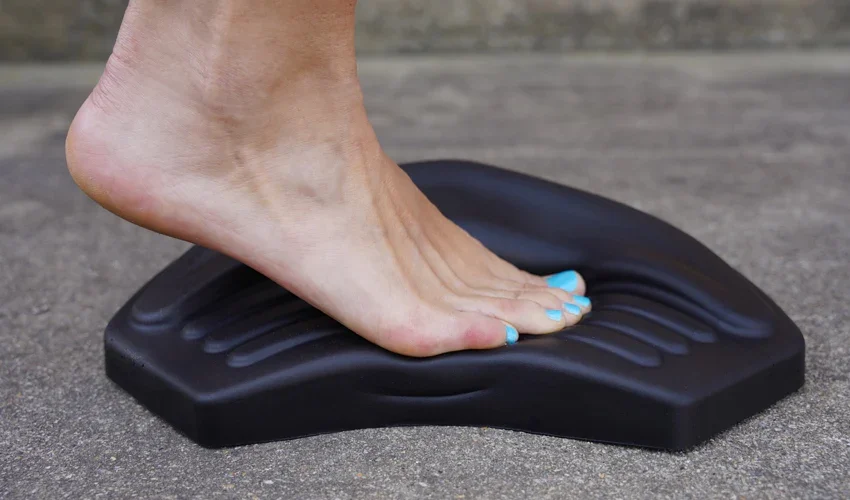
Therapeutic Exercises (Toe Pro, pictured)
Dry Needling
Acupuncture
PAILS/RAILS/CARS
Myofascial Release